It is so weak because it uses such a small vibrate motor. The counterweight's mass isn't enough to make for an adequate vibration, especially given the One's large size. Here it is next to the iPhone 4's vibrate motor:

And next to the iPhone 5's motor:

For size reference, the OnePlus One vs. iPhone 4:

Source: Phone Arena Size Comparison Tool
If the OPO's motor counterweight is approximately 25% shorter in diameter than the iPhone 4's motor, then it could be as much as 40% lighter than the iPhone's (because π r² and stuff), assuming their lengths and mass densities are about the same .
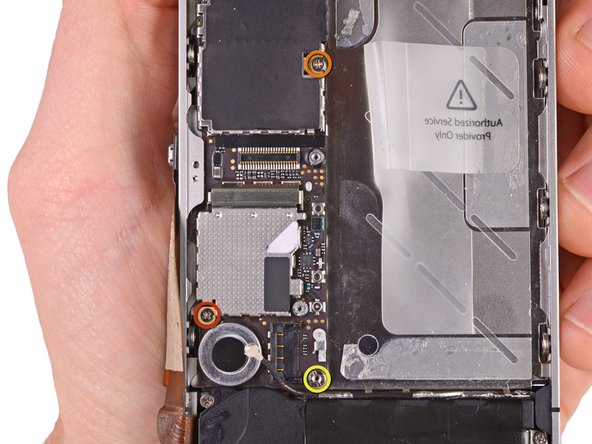
The motor is mounted on a flex cable, then the flex is adhered to the chassis. It is not mounted directly on the chassis, unlike other phones. The vibration caused by the motor could possibly be dampened by the adhesive tape between the flex and the chassis, or cause it to come loose over time.

iPhone 4 - mounted directly on the chassis:

iPhone 4S - mounted on the chassis:
iPhone 5/S - mounted on the chassis:

LG Nexus 5 - mounted on the battery cover:

HTC One X - mounted on the chassis:

And as you can see, the motor is inside the right speaker's cavity, so the sound generated by the motor might be amplified.

Its vibration may also sound "rattly" in comparison with Samsung phones' vibration, because Samsung (as well as LG, Sony and the iPhone 4S and 6/Plus) uses linear oscillation motors as opposed to the electric motor with counterweight type. The former have a better "vibration-to-noise" ratio than the latter. They run on AC as opposed to DC, so they can reach peak vibration almost instantaneously, requiring no spin-up and spin-down time. This is especially noticeable in the keyboard's haptic feedback, where the vibration only lasts a few fractions of a second at a time. The amplitude of a linear vibration can also be changed without affecting the frequency, so it is also much more precise.
Vibrate motors from left to right: Samsung Galaxy S3, iPhone 4S, Sony Xperia Z, iPhone 5 (very similar size to the iPhone 4's), HTC One X, iPhone 3GS


More information about electric motor vibration motors: http://www.precisionmicrodrives.com/...n-applications
More information about linear oscillation (or linear resonance) motors: http://www.precisionmicrodrives.com/...bration-motors
And next to the iPhone 5's motor:
For size reference, the OnePlus One vs. iPhone 4:
Source: Phone Arena Size Comparison Tool
If the OPO's motor counterweight is approximately 25% shorter in diameter than the iPhone 4's motor, then it could be as much as 40% lighter than the iPhone's (because π r² and stuff), assuming their lengths and mass densities are about the same .
The motor is mounted on a flex cable, then the flex is adhered to the chassis. It is not mounted directly on the chassis, unlike other phones. The vibration caused by the motor could possibly be dampened by the adhesive tape between the flex and the chassis, or cause it to come loose over time.
iPhone 4 - mounted directly on the chassis:
iPhone 4S - mounted on the chassis:
iPhone 5/S - mounted on the chassis:
LG Nexus 5 - mounted on the battery cover:
HTC One X - mounted on the chassis:
And as you can see, the motor is inside the right speaker's cavity, so the sound generated by the motor might be amplified.
Its vibration may also sound "rattly" in comparison with Samsung phones' vibration, because Samsung (as well as LG, Sony and the iPhone 4S and 6/Plus) uses linear oscillation motors as opposed to the electric motor with counterweight type. The former have a better "vibration-to-noise" ratio than the latter. They run on AC as opposed to DC, so they can reach peak vibration almost instantaneously, requiring no spin-up and spin-down time. This is especially noticeable in the keyboard's haptic feedback, where the vibration only lasts a few fractions of a second at a time. The amplitude of a linear vibration can also be changed without affecting the frequency, so it is also much more precise.
Vibrate motors from left to right: Samsung Galaxy S3, iPhone 4S, Sony Xperia Z, iPhone 5 (very similar size to the iPhone 4's), HTC One X, iPhone 3GS
More information about electric motor vibration motors: http://www.precisionmicrodrives.com/...n-applications
More information about linear oscillation (or linear resonance) motors: http://www.precisionmicrodrives.com/...bration-motors

Aucun commentaire:
Enregistrer un commentaire